blog
Which AI search engine sends the most qualified traffic?
If you have looked at your analytics lately, you have probably noticed something new. AI referrals are starting to show up. Not in huge numbers yet, not for most sites, but they are there: ChatGPT, Perplexity, Gemini, Claude, Grok, and sometimes Google AI Overviews.
The obvious question is whether any of it is worth paying attention to. Because traffic was never really the goal. Qualified traffic is.
Someone who lands on your site after searching "best CRM software" is not the same as someone who arrives after asking an assistant, "what is the best CRM for a 50-person B2B sales team that already uses HubSpot?" One of them is browsing. The other has already narrowed the problem down to something specific. That is a big difference, and it is the whole reason this question matters.
Why AI traffic feels different
Traditional search usually starts broad. You type a few keywords, skim a page of results, open five tabs, close four of them, and maybe come back tomorrow.
AI search works differently. People ask full questions. They explain their situation, add constraints, and follow up. By the time they click a link, they have often done half the research already. That changes the quality of the visit in a way that is hard to overstate: someone arriving from an AI answer usually knows exactly why they are there.
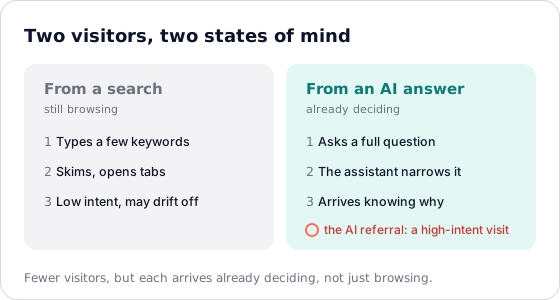
AI visitors explain before they click, so they arrive validating a choice rather than starting from scratch.
But which AI actually sends the best visitors?
That is the question a lot of marketers are asking, and the honest answer is that nobody can crown a winner yet. AI search is young, referral tracking is imperfect, and every platform exposes links a little differently. Still, some patterns are starting to show.
ChatGPT
ChatGPT has quietly become the default starting point for a lot of knowledge work. People use it to compare products, make sense of complicated topics, shortlist vendors, and work out what to evaluate next.
When it includes a link, it is usually because that source backs up part of the answer, not because it is trying to send traffic anywhere. So the clicks tend to come later in the decision, when the question has already sharpened from "what is project management software?" into something like:
"Which project management platform works best for a remote engineering team?"
That is a much stronger buying signal. The catch is that ChatGPT links far less often than Google does. When it does, though, the visitor usually shows up with a specific question already in mind.
Perplexity
Perplexity feels the closest to traditional search. Every answer is stacked with sources, and the whole design nudges people to keep exploring them. If your content gets cited, clicks are much more likely to follow.
For publishers and content-heavy sites, that already makes it an interesting referral source. It also tends to reward detailed, well-supported writing over pages built around a keyword.
Google AI Overviews
Google sits in a strange spot. It still sends far more traffic than any dedicated AI platform, but Overviews are changing how people move through the results. Some searches never produce a click at all, because the summary answered everything. Others produce a more informed visitor who clicks only after reading it.
The volume is still enormous next to the assistants. Whether the quality is better depends almost entirely on the intent behind the search.
Gemini
Gemini is woven tightly into Google's ecosystem, yet for now it does not seem to drive the referral traffic that either Google Search or Perplexity does. That could shift quickly as it spreads across Search, Workspace, Android, and Chrome, so it is probably too early to judge its long-term value on referral data alone.
Grok
Grok is the newcomer of the group. It lives inside X, where people already fire questions off all day, but its referral footprint is still small and hard to read. Like Gemini, it is too early to judge on the numbers alone. One to keep half an eye on as more of that asking turns into clicking.
Claude
Claude is interesting for a different reason. Its audience leans toward developers, technical teams, researchers, and people working through long documents. Referral volume looks small today, but the visitors can be unusually qualified, because they tend to be working on a genuinely hard problem rather than browsing. For some B2B companies, a handful of visitors like that is worth more than hundreds of generic ones.
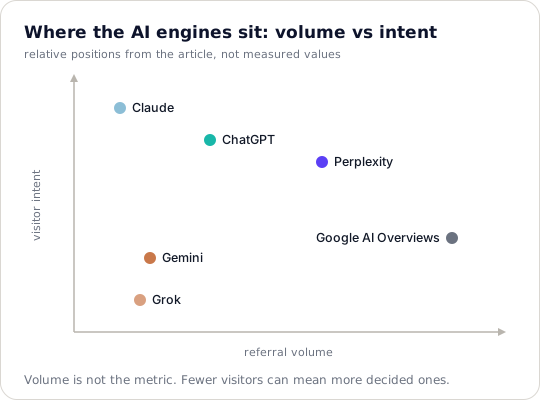
Volume is not the metric. Google sends the most, but Perplexity, ChatGPT and Claude send visitors who already did the research.
Volume is not the right metric
It is tempting to rank AI platforms the way we rank search engines: which one sends the most visitors? Useful, but it misses the point.
Picture two channels. The first sends 5,000 visitors, the second sends 300. If those 300 convert at five times the rate, which would you rather have? The early AI numbers are worth watching for exactly that reason. It is still early and the data is thin, so treat this as a signal rather than a verdict, but AI referrals appear to arrive in lower volumes with stronger engagement: more time on the page, fewer quick bounces, clearer intent. It fits how people behave when they are using AI to research something instead of to browse.
What makes AI visitors different
It comes down to context. AI users do not just search, they explain. Instead of typing "best email software," they are more likely to ask:
"What is the best email platform for a SaaS company with 20,000 subscribers that wants advanced automation without hiring a dedicated CRM team?"
Practically a discovery call. The assistant narrows the options before the visitor ever reaches your site, so by the time they click, they are often validating a choice rather than starting from scratch.
The companies that benefit most
Not every business will see the same thing. Right now, AI search looks especially valuable where buyers ask complicated questions and take their time comparing options:
- B2B software
- Professional services
- Agencies
- Healthcare
- Financial services
- Education
- Enterprise technology
These are exactly the areas where AI is good at helping people think through a decision, which is also where a well-placed citation can do real work.
What marketers should actually measure
Referral traffic is only the first step. The more useful questions sit underneath it:
- Which AI platforms mention your brand?
- Which competitors show up next to you?
- Which prompts trigger those mentions?
- How often are you cited?
- Which pages attract the AI referrals?
- Do AI visitors convert differently from search visitors?
Those tell a far clearer story than a visitor count ever could.
So, which one wins?
It depends on what you mean by "qualified." If you only care about referral volume, Google still dominates. If you care about visitors who arrive after genuinely researching a problem, Perplexity and ChatGPT stand out. And if you sell into technical or enterprise markets, Claude may send fewer people, but they can be remarkably focused.
The bigger takeaway is not that one platform has already won. It is that AI is quietly rewriting what a qualified visitor even looks like. Instead of casting a wide net and hoping, people now narrow their choices before they ever land on your site. That means fewer clicks in some cases. But the ones you do get can matter a great deal more, and that is the number worth watching.
Voris was built for exactly this shift. It separates AI referrals from the rest of your traffic, names the assistants sending them, and shows you whether those visitors convert. See how AI visibility works →