blog
ChatGPT vs Perplexity for B2B discovery
B2B buying used to start in predictable places. Google, a software directory, a trade publication, a word from someone you trust. A growing share of it now starts with a conversation instead.
One buyer asks ChatGPT for the best consent management platforms for a European SaaS company. Another opens Perplexity to research privacy-first analytics tools, compare five vendors, and check which claims hold up against independent sources. Both can walk a buyer toward a company they had never heard of that morning. But the two work differently, and the difference decides how your brand shows up.
So which one matters more for B2B discovery? It depends on which kind of discovery you mean.
Buyers are already researching in AI
AI search stopped being an experiment B2B marketers could park to one side. In G2's March 2026 survey of 1,076 software buyers, 71% said they use AI chatbots during software research, and 51% now begin research with a chatbot more often than with Google. A year earlier that second figure was 29%. One in three said they bought from a vendor they had not heard of before the chatbot named it.
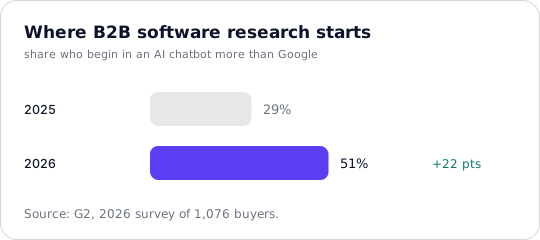
In a year, the share of buyers who start software research in a chatbot rather than Google went from 29% to 51%. Source: G2.
Google has not gone anywhere. A layer went on top of it. Instead of typing best web analytics software, a buyer can ask:
What are the best privacy-first web analytics platforms for a European SaaS company that does not want cookies?
Then keep going in the same thread:
Which of those also measure traffic from AI assistants?
Compare the three strongest for a company with 500,000 monthly visitors.
The buyer never restarts. The conversation carries the context forward, and each answer narrows the field a little more.
ChatGPT is where discovery happens by accident
ChatGPT is hard to line up against a search engine, because people bring it far more than searches. A thread often opens on a problem rather than a product:
Our organic traffic is flat but conversions are falling. Could AI search be changing how people find us?
A few replies later it turns into "what tools measure this?", and a vendor lands in the answer. The buyer did not sit down to shop. They were trying to understand something, and the software arrived as part of the explanation. That lets a company enter the shortlist before the buyer has even settled on a product category.
Perplexity starts closer to search
Perplexity behaves more like a search engine that writes back. It calls itself one, and citations sit at the center of the experience: answers arrive with links, so moving from the summary into the source underneath takes one click.
For B2B research that fits the job. Someone comparing security platforms, analytics tools, or payment providers usually will not take an AI recommendation at face value. They want to see where it came from. Perplexity keeps that step in view, which makes it both the research assistant and the door into the source material.
The audience gap runs one way
On raw reach, ChatGPT leads. Semrush surveyed more than 600 US business professionals in 2026: 71% used ChatGPT for product research, against 18% for Perplexity. You can rank well in the smaller engine and still miss most of the buyers.
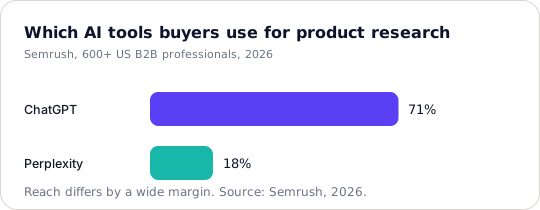
For product research specifically, ChatGPT reaches 71% of B2B buyers to Perplexity's 18%. Source: Semrush.
Reach is only half of it. The same survey found buyers leaning on AI across the whole purchase: understanding a category, exploring options, comparing vendors, cutting the shortlist, backing the final call. Being named when someone asks for a definition is not the same as being recommended when they ask who to shortlist. Where you appear matters as much as whether you appear.
Perplexity's citations tell you more
Because sources are part of Perplexity's product rather than a footnote, a citation there is a specific signal. It does not just mean a model has heard of you. It tells you which piece of your content got picked to support an answer, and patterns build up over time.
Maybe your research gets cited often while your product never gets recommended. Maybe your docs win the technical questions and a competitor owns the commercial comparisons. Maybe your brand shows up in the answer but a third-party site gets credited as the source instead of your own page. Each of those is a different problem, and none of them shows up in a single visibility score. This is the part Voris was built to read: which citations turn into visits, and which visits turn into revenue.
ChatGPT can move a buyer without a click
ChatGPT poses a measurement problem of its own. A buyer can meet your company, learn what it does, weigh it against rivals, and remember the name, all without clicking anything. Later they search your brand on Google or type the domain straight in. Your analytics files that under Direct or Organic Search, and the thread where it actually started is invisible.
So AI visibility cannot be read off referral traffic alone. AI can shape demand without owning the last click, and in B2B, where a purchase can take weeks or months, that gap between influence and attribution only widens.
Discovery and verification are not the same
That is the real split between the two. ChatGPT is strong at conversational exploration, taking a buyer from a vague problem toward a shortlist. Perplexity is strong when the buyer wants to inspect the evidence behind an answer. Most buyers use both: discover three vendors in ChatGPT, look them up in Perplexity, read the sources, visit two sites, check reviews elsewhere, ask for one more comparison, then book a demo. Pin that journey on a single channel and you lose what actually happened. AI discovery has gone multi-platform, the way digital discovery went multi-channel a decade ago.
For new brands, being known is not being picked
Here is the hard part for anyone early. Neither platform will surface you just because your product exists. A 2026 study, "The Discovery Gap," ran 112 Product Hunt startups through 2,240 queries against ChatGPT and Perplexity. Asked about a product by name, the models recognized it almost every time: 99% for ChatGPT, 94% for Perplexity. Asked an open discovery question, like the best tools launched this year, the hit rate fell off a cliff, to 3% and 8%.
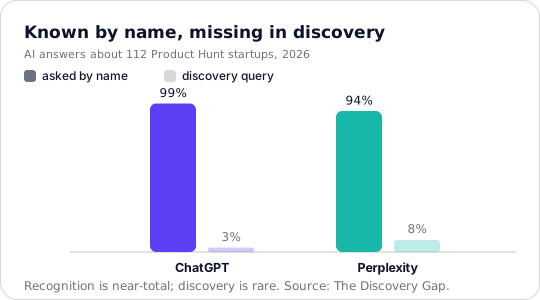
Both tools know a product asked for by name. Neither reliably surfaces it in an open discovery query. Source: The Discovery Gap.
There is a wide gap between:
What is Acme Analytics?
and:
What are the best analytics platforms for a privacy-conscious SaaS company?
The first tests whether an AI knows you. The second tests whether it thinks of you. For anyone tracking AI visibility, the second question is the one worth money. A company can be understood perfectly and still go missing the moment the buyer stops naming it. The study also found what predicted discovery: referring domains, Product Hunt rank, and a Reddit presence. Off-site authority carried over. A tidy on-page score on its own did not.
What actually makes a brand discoverable
There is no checklist that guarantees a recommendation. There is a plainer problem underneath. An AI system needs enough credible information to work out what you do, who you are for, how you differ, and whether anyone besides you backs the claim.
Your own site is part of that, not all of it. Documentation, product pages, original research, reviews, trade press, comparisons, community threads: they all feed the picture. If your homepage says you are the best in the category and almost nobody else on the web mentions you, an AI has little independent evidence to lean on. This is why answer engine optimization and generative engine optimization cannot just be on-page SEO with a new name. You are not only tuning pages. You are building evidence.
What to measure
The temptation is to check whether you show up in ChatGPT or Perplexity and stop. That is not enough. Watch how you do across the types of prompt: when a buyer first researches the problem, when they ask for possible solutions, when they ask for a comparison, and when they add constraints like company size, industry, location, privacy, or budget.
Then read what surrounds the mention. Which sources get cited. Which competitors sit beside you. What the model says you are good and bad at. Which claims about you are out of date or simply wrong. That is the work you cannot do by hand-checking a handful of prompts, and it is where citation tracking earns its keep.
Where your brand lives between the two
For most B2B companies, ChatGPT is the higher priority today, on reach alone. That does not make Perplexity a footnote. Its search-first shape and visible sources suit research-heavy decisions, while ChatGPT's conversational pull works earlier, sometimes before the buyer knows which category they need.
The more useful question is not ChatGPT versus Perplexity. It is where your brand appears while a buyer moves between them. A question gets asked, an AI suggests a few names, the buyer digs into one, another AI hands over the sources, the shortlist forms, and maybe a visit lands on your site. By the time that visit reaches your analytics, much of the buying has already happened. If your brand was missing from the earlier answers, you will never see the visitor who picked someone else.